Both sides of the table
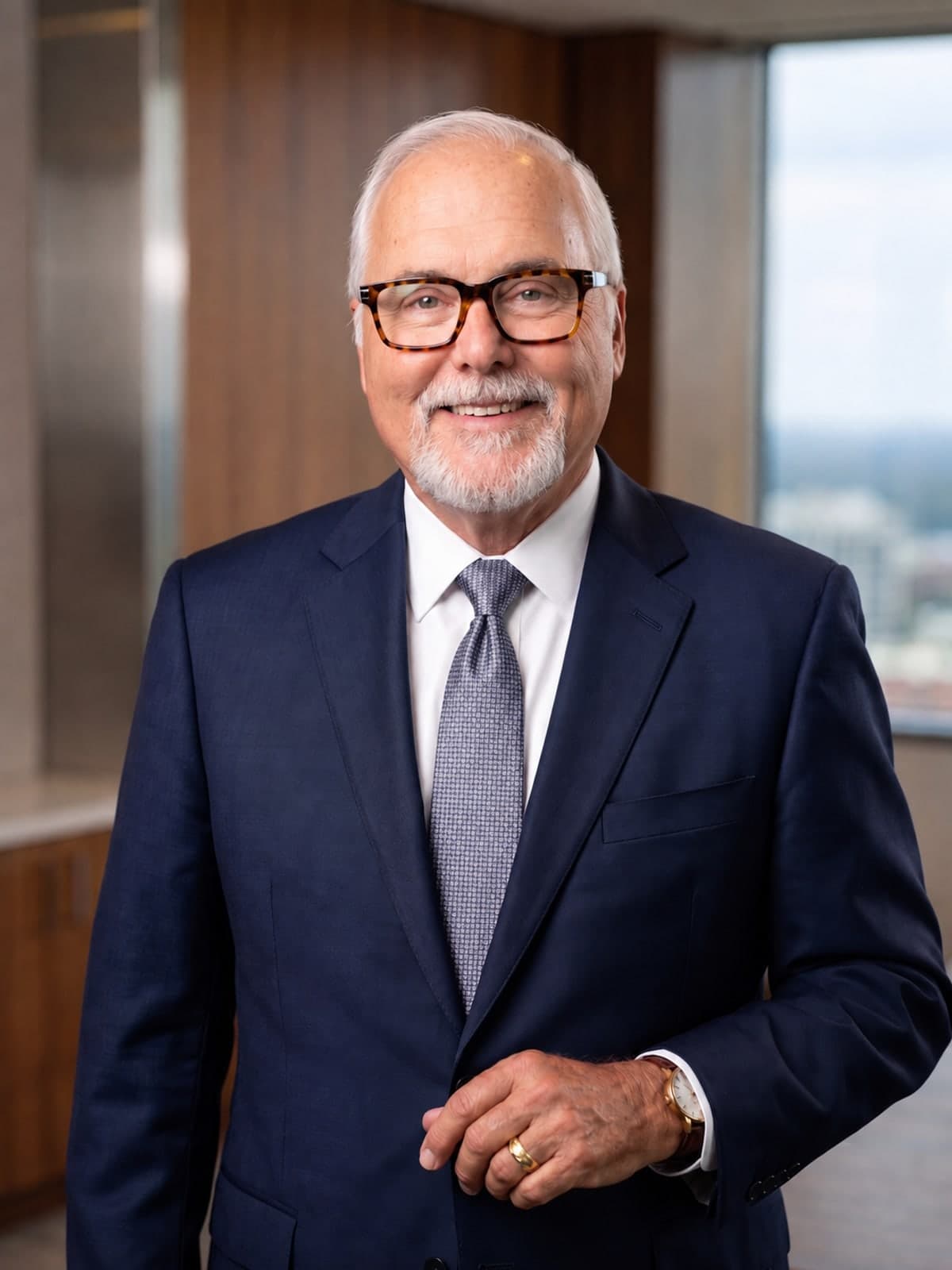
I started on the industry side, and not in a glamorous corner of it. In 1986 I joined the Wackenhut Corporation’s world headquarters, managing investigations; from there I moved to Business Risks International, selling specialized investigations and security consulting to Fortune 500 companies in pharmaceuticals, finance, manufacturing, and retail. It was an education no business school offers: how large companies actually decide, who signs, who blocks, and what an outsider has to prove before anyone trusts him.
In 1993 I joined LexisNexis as an account manager, working with large law firms and corporations just as legal and business research moved online. Over six years I grew market share and revenue in online databases, application software, and internet publishing tools — through a platform shift that rewrote how an entire profession worked. Selling through that shift taught me the difference between a customer and a partner: customers buy a product; partners bet on where you are going.
Project MUSE brought me to the academy’s side of the table in 1999. At Johns Hopkins University and its university press, I ran the operation — strategic planning, partner recruitment, sales and marketing, day-to-day management — of an online publishing collaboration of twenty-five universities, university presses, and scholarly associations, serving subscribing institutions around the world. It was my first time building revenue inside a university, and my first clear sight of a truth that has held ever since: the academy holds extraordinary assets and, too often, no coherent way to offer them.
In 2001 I moved to the National Center for Supercomputing Applications at the University of Illinois Urbana-Champaign, where the job was to put some of the world’s most capable computing in front of the private sector — largely Fortune 500 companies — and to move NCSA-born technologies out into the market, work that produced two startups during my term. I authored the economic-development case in NCSA’s proposal for Blue Waters, the petascale supercomputer NSF funded in 2007. The campus later asked me to direct IT and economic development for the university as a whole — fifteen years, all told, of learning how a public research university creates value beyond its walls.
Along the way I co-founded a company of my own. WayMark Analytics grew out of NSF-funded research on stakeholder alignment and came to market through the NSF I-Corps program; as co-founder and chief operations officer from 2013 to 2020, I helped organizations in the United States and abroad map the stakeholders and interests in large, complicated, multi-party projects — the kind where misreading one constituency can stall the whole effort. Founding a company from university research taught me the commercialization path from the inside.
Carnegie Mellon recruited me in 2016, and the role grew with the results — by 2020 the university had combined two associate-vice-president positions into one seat reporting to both the Vice President for Research and the Vice President for University Advancement. We convened the university’s asset teams to plan and present one voice to corporate partners. Georgia Tech then hired me in 2022 as its founding Associate Vice President of Corporate Engagement, with a clean-sheet mandate: close two legacy offices, build one holistic organization, and grow. Georgia Tech came to call the model a blueprint for the 21st-century university, and leaders from campuses across the country sought out the office to study it. In 2026 I stepped down to bring the model to other institutions.
Flowers into trees
Every framework I use comes down to one picture. A one-off research transaction is a flower: genuinely valuable, quick to bloom, gone in a season. An enterprise partnership is a tree: slower, deliberately planted, with roots across research, talent, education, philanthropy, and licensing — and it compounds. The work of corporate engagement is turning flowers into trees.
Two convictions follow. First, silos kill: when a company asks a university a question and gets an answer from one office’s perspective alone, the partnership is already in danger — so I build organizations that answer with one voice, through one front door. Second, engagement is an operating discipline, not a networking activity: it needs structure, an instrumented pipeline, front-end partner screening, and people — ideally hired from industry — who know how companies buy.
And it is a two-way ethic. Universities deserve partners who respect how research actually works; companies deserve campuses that answer coherently and move at a defensible speed. Thirty years on both sides of the table have convinced me that neither has to settle.
The career, end to end.
 Account manager for large law firms and corporations — grew online-research market share through the industry’s shift to the web.
 Ran Project MUSE — a 25-institution online publishing collaboration serving universities worldwide.
 Redesigned and relaunched the NCSA industry program for Fortune 500 companies; participated in the Office of Corporate Relations launch (2006); actively promoted the University of Illinois Research Park and the balance of Illinois.
 AVP for Business Engagement — implemented the channel engagement model and the Center for Business Engagement strategy; Facebook, Honeywell Robotics, and Philips opened facilities near campus.
 Founding AVP of Corporate Engagement — built the office peers now benchmark.
 J. Mark Nolan ConsultingBringing the model to institutions nationwide.